
FLUX 3 Image Klein: the FLUX 3 you can run on your own computer
A FLUX 3 you can download and run on your own graphics card. What it can do, the computer it needs, and what its licence lets you do with the pictures.
In this articleKlein is the part of FLUX 3 you can download
Klein is the part of FLUX 3 you can download
Black Forest Labs released FLUX 3 Image on 1 October 2026 as a model you reach through its API and Playground, with no download. Two weeks later, on 15 October 2026, it released FLUX 3 Image Klein: a smaller version, 5.6 billion parameters, with open weights on Hugging Face. The company used the same name for its compact FLUX.2 [klein] models.
The launch post says Klein “shares core capabilities with the full FLUX 3 Image model”: making pictures from a prompt, editing a picture you give it, combining up to ten reference pictures, and placing each element with a box. It comes in two versions:
- Klein, step-distilled for speed (16 steps). This is the checkpoint Black Forest Labs also serves on its API.
- Klein Base, the undistilled model (50 steps), meant for training your own styles, products or characters as a LoRA.
So the straight answer to “is FLUX 3 open source?” is: one part of it has open weights, under a licence with conditions (below). The full FLUX 3 Image is still closed. Black Forest Labs calls Klein “the second open weights release from the FLUX 3 family”, after FLUX 3 Action, a model for robots, and says “More will follow”. Its July 2026 announcement promised an open FLUX 3 Dev; as of 23 October 2026 there is no date for it.
What it does, next to the full FLUX 3 Image
All of this is from Black Forest Labs’ launch post, documentation and Hugging Face model card, read on 23 October 2026. We haven’t run our own tests.
| FLUX 3 Image Klein | FLUX 3 Image | |
|---|---|---|
| Released | 15 October 2026 | 1 October 2026 |
| Download | Yes, open weights on Hugging Face | No |
| Size | 5.6 billion parameters (the image part; the text encoder is separate) | Not published |
| Make, edit, combine references | Yes, up to 10 references | Yes, up to 10 references |
| Boxes to place each element | Yes | Yes |
| Largest picture | Up to 4K | Up to 4K, about 16 megapixels |
| Train your own LoRA | Yes, on Klein Base | No |
| Where | Your own computer, Black Forest Labs’ API and Playground, ComfyUI, OpenRouter | Black Forest Labs’ API and Playground, Higgsfield, Krea and others |
Two differences matter in practice. First, edits through the API leave the rest of the picture exactly as it was, because the API adds what the launch post calls “pixel restoration, which preserves unedited regions of an image exactly”. The model card says plainly that on its own, “Edits can change content outside the requested region.” Second, boxes guide rather than cut: the model card says they “set placement and scale, not a hard mask”, so an element can spill past its box, and a very small one may not appear at all.
How good is it? In Black Forest Labs’ own blind evaluations, published in the launch post, Klein ranks first among the open-weights models it was compared with, for making pictures, combining references and editing, and above two closed models, Ideogram V4.5 and FLUX.2 [pro]. Those are the maker’s own tests, so treat them as a claim to check against your own prompts.
The model card also lists the usual limits: text in pictures “may be inaccurate or subject to distortion”, results can miss the prompt, and “Short prompts produce generic output”. That last one leads to the most important thing to know before you install it.
The prompt helper you mustn’t skip. Klein was trained on long, detailed scene descriptions, not short prompts. Black Forest Labs’ documentation says, in bold, “Do not use it without its prompt upsampler.” The upsampler is a separate language model that turns “a lynx in the snow” into a full description: the framing, the subject’s colours and materials, the background, the light and the lens.
You have three ways to handle it:
- Use Black Forest Labs’ upsampler,
flux-3-image-klein-pup, a 9 billion parameter model. Its reference code runs it by default. It is an 18.8 GB download, and the documentation says it “adds about 28 GB of GPU memory”. - Use any language model you already have, with the system prompt Black Forest Labs publishes on the upsampler’s Hugging Face page. The model card says “Any other LLM can take its place”.
- Write the full description yourself: framing, subject, background and lighting, in the style of the examples on Black Forest Labs’ documentation page.
For edits, the same applies: a one-line instruction such as “make it blue”, sent as typed, “reframes the shot”, the model card warns. Let the upsampler see the picture and your instruction together, and it writes a full description of the picture with the change folded in.
What computer you need
This is where the figures need reading carefully, because Black Forest Labs gives several, for different set-ups:
- The smallest build runs on 8 GB. The launch post says that with the INT8 build, Klein “runs on NVIDIA GeForce RTX GPUs with as little as 8GB of VRAM, through ComfyUI or Diffusers”.
- The weights themselves are 11.2 GB in full precision (BF16) and 5.6 GB in FP8, according to the launch post.
- Speed: with the distilled model and the INT8 build, NVIDIA measured about 4 seconds for a 1 megapixel picture on an RTX 5090 and under 9 seconds on an RTX 4070, in ComfyUI.
- The documentation’s summary is that Klein “fits on consumer GPUs, down to an RTX 3090”.
- Black Forest Labs’ own reference code needs far more: the model card measures a peak of 31 GB in BF16, 26 GB in FP8 and 25 GB in NVFP4 for a 1024 by 1024 picture with the upsampler off, on a data-centre card.
The upsampler sits on top of all of these. Black Forest Labs doesn’t give a figure for running Klein and its upsampler together on an 8 GB card. If yours is small, the practical route is the 8 GB build for pictures, with your prompts expanded by a language model elsewhere, or written in full by you.
Every figure Black Forest Labs publishes is for NVIDIA graphics cards. Its pages we read don’t mention Macs or other graphics cards.
Can you sell what you make with it?
The weights come under the FLUX Kommunity License, version 1.0, published with Klein on 15 October 2026. You have to accept it on Hugging Face, signed in, before the files download. In plain words, from the licence itself (this is our reading, not legal advice):
- Personal, hobby and research use is free. So is testing by companies, away from real customers.
- Commercial use of what you make is allowed for “Qualifying Users”: you, “together with your affiliates”, with “gross annualized revenue” under US$5,000,000. Black Forest Labs’ launch post sums it up as “free commercial use for individuals and companies with annual revenue under $5M”.
- There are conditions. You must either use content filters or review what you make “for unlawful or infringing content” before you share it, and label it as made with AI “to the extent required under applicable law”.
- The pictures are yours to answer for. The licence says Black Forest Labs claims “no ownership rights” in what you make, and that you are responsible for it.
- Some things are off limits whatever your size, including using the outputs to improve another image model, and pictures that break other people’s rights, “including rights of publicity”. The full list is in section 4 of the licence.
- Bigger companies, and anyone wanting to build Klein into a product at scale, need a licence from Black Forest Labs (see its licensing page).
So a freelancer making pictures for clients, or a small brand making its own ads, is covered, as long as they review what they make and label it where the law asks. As we read it, the revenue test is about you and your affiliates, not your client.
How to try it
You don’t need to install anything to see whether it suits you:
- Hugging Face Space: Black Forest Labs’ own FLUX 3 Image Klein Space runs it in a browser on shared machines.
- Black Forest Labs’ Playground and API, where the distilled model runs with the upsampler and pixel restoration built in. For costs, see Black Forest Labs’ pricing page.
- OpenRouter lists FLUX 3 Image Klein with Black Forest Labs as the provider, released 15 October 2026.
- Comfy Cloud, from ComfyUI’s own Klein page, runs the ready-made workflow on Comfy’s machines.
To run it on your own computer, Black Forest Labs’ documentation gives three steps for ComfyUI: update ComfyUI to the latest version, download the Klein weights from Black Forest Labs’ ComfyUI repository on Hugging Face, then load the Klein workflow from the ComfyUI Klein page and type your prompt. Diffusers and Black Forest Labs’ own code on GitHub are the other routes, for people comfortable with Python.
Klein Base is the one to train on. Black Forest Labs’ documentation says “A rank-32 LoRA trained on a handful of images on a single GPU is enough to teach Klein a new style or edit”, and its worked example used 20 pictures and took about 4.5 hours on one card. A LoRA trained on Base also loads into the faster Klein. If you train one on a character, keep the training pictures as your reference set; our guide to keeping a character consistent explains why one fixed set beats a fresh screenshot every time.
If you would rather not run anything yourself, the full FLUX 3 Image is on Higgsfield, whose changelog of 1 October 2026 lists it under Image, in the model selector.
Keeping what you make with it
Running a model on your own computer means the pictures pile up in its output folder. Next to everything you make on Higgsfield, ChatGPT or Gemini, that folder is easy to lose track of. Move the ones you want to keep out as you go, and give them names that say which model made them.
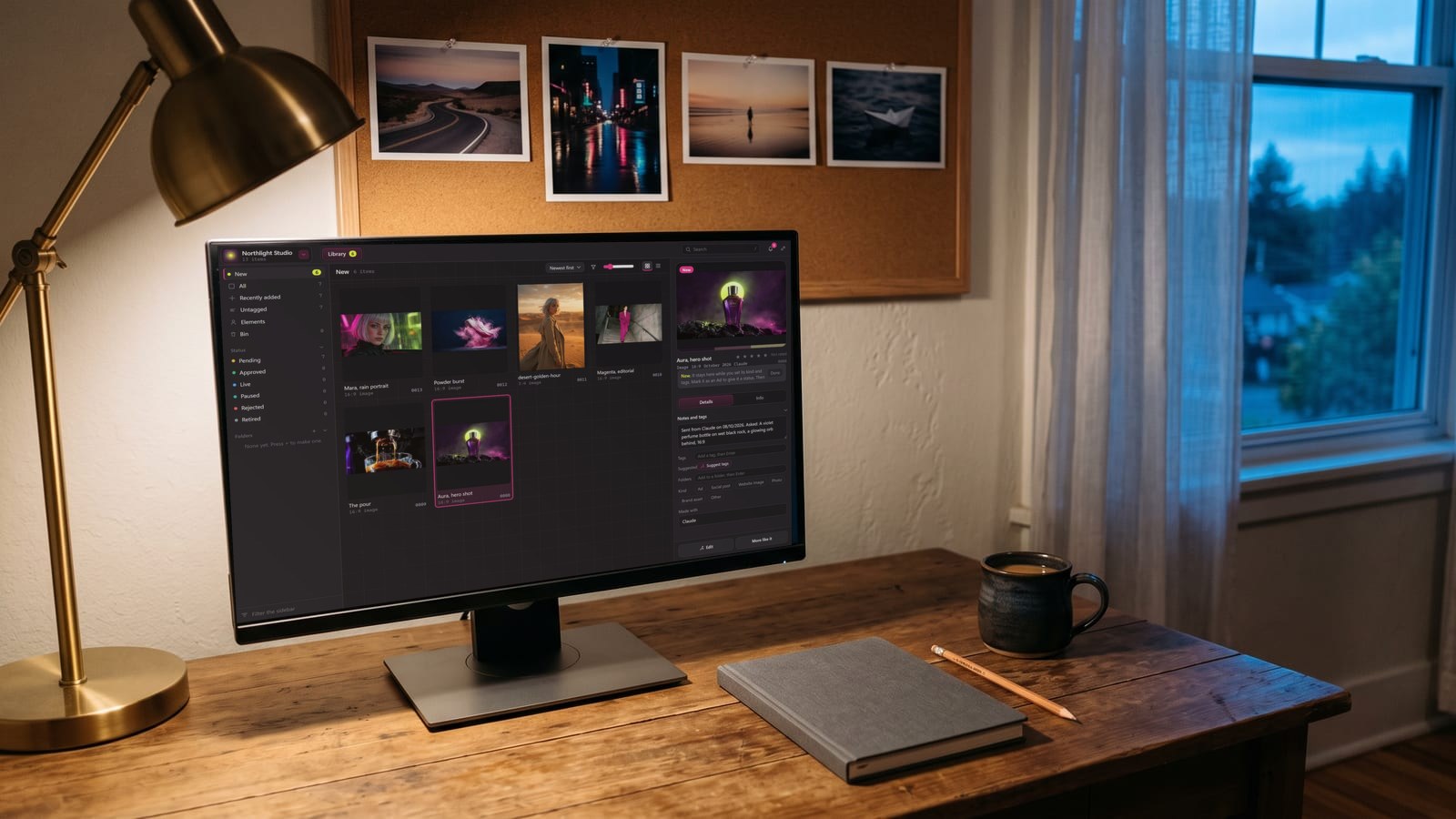
BosOn doesn’t run FLUX 3 Image Klein (our ready connections are on the integrations page), but you can drag the pictures, or the whole folder, into its library, or save the good ones into its inbox folder and they come in by themselves, next to everything else you make. BosOn is for Windows and Mac, in early access.
Questions people also ask
Is FLUX 3 open source?
Not in the strict sense. FLUX 3 Image Klein, released on 15 October 2026, has open weights you can download from Hugging Face, but under the FLUX Kommunity License, which limits commercial use. The full FLUX 3 Image model has no public download.
Can I run FLUX 3 locally?
You can run FLUX 3 Image Klein locally, through ComfyUI, Hugging Face Diffusers or Black Forest Labs' own code. Black Forest Labs says its smallest build runs on NVIDIA GeForce RTX cards with 8 GB of video memory through ComfyUI or Diffusers. The full FLUX 3 Image runs only on Black Forest Labs' servers and the platforms that offer it.
Can I use FLUX 3 Image Klein pictures commercially?
Yes, if you and your affiliates have under $5 million a year in revenue, under the FLUX Kommunity License as published on 15 October 2026. You must filter or review what you make for unlawful or infringing content, and label it as AI-made where the law requires. Larger companies need a licence from Black Forest Labs.
What is the difference between Klein and Klein Base?
Both have 5.6 billion parameters. Klein is step-distilled for speed, taking 16 steps; Klein Base is the undistilled model, taking 50 steps, and is the one to train a LoRA on. A LoRA trained on Klein Base also loads into Klein without conversion, according to Black Forest Labs' documentation.
Do I need the prompt upsampler for FLUX 3 Image Klein?
Black Forest Labs says not to use Klein without one. Klein was trained on long scene descriptions, so a short prompt gives generic results. You can use Black Forest Labs' own upsampler model, or any language model given its published system prompt, or write the full description yourself.
Sources
- Black Forest Labs: FLUX 3 Image Klein (15 October 2026)
- Black Forest Labs: FLUX 3 Image Klein model page
- Black Forest Labs docs: FLUX 3 Image Klein
- Black Forest Labs docs: API release notes
- Hugging Face: black-forest-labs/flux-3-image-klein model card
- Hugging Face: FLUX Kommunity License v1.0
- Hugging Face: FLUX 3 Image Klein Space
- Comfy: FLUX 3 Image Klein
- OpenRouter: Black Forest Labs, FLUX 3 Image Klein
- Black Forest Labs: FLUX 3, Real World Models (23 July 2026)
- Krea: FLUX 3 Image
- Higgsfield: changelog (FLUX 3 Image, 1 October 2026)
Keep reading
All guides
Make it anywhere, find it in BosOn.
Every picture, video and sound you make with AI, in one library on your computer.
Request early accessNight drive, made with Kling 3.0 from a GPT Image 2.5 still